
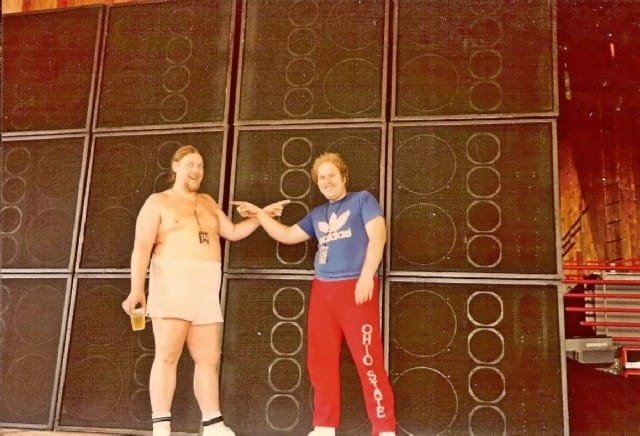
The story of “Then and Now”
What happened?
I didn’t go to school to learn about the road. Unless you count truck loading as school. At load in when we had the trucks unloaded, I stuck around, watched and asked questions when I had the opportunity. That was my four year degree. (It took longer than four years)
Now they have degrees and well……laptops and cellphones.– the live-music business is staffed by techs who would never throw a TV out the window
Before the live-music industry became what it has become, being on the road was, for many bands, all about sex, drugs and even some rock’n’roll. It wasn’t just the band. Their road crews were right there with them, or before them, every day. During load in, sound check, it didn’t matter
Roadies are full of such stories, many of them involving unpleasant treatment of female fans. But that era has long passed, and with it the idea of roadies as folk legends. They have since become “techs” who often have degrees and treat the job as a job. “Bad behaviour isn’t acceptable any more. “A lot more is expected of you. People think it’s crazy backstage, and it’s girls and drugs, but it’s not. It’s now the men and women doing the jobs. There are more jobs, new opportunities
With the biggest acts generating amazing box-office receipts, unprofessional behaviour is likely to result in a plane ticket home.
But if techs (roadies) have become less visible, it’s brought them closer together. Being the backbone of the live-music business generates a particularly intense working relationship. There are conventions dedicated to the touring industry; there are industry websites (Thankfully) and real college courses.
But, despite the new clean life on tour, there are hints that things still go on that isn’t or shouldn’t be talked about if you like your job. But, like most of the techs I speak to, there’s a distinction between
“Then and Now.”
It’s not just tuning guitars and counting cash now. It’s all about programming and knowing how to operate in a digital world. This means being financially responsible.
Younger roadies, (men and women) who get their foot in the door not by being friends with the band but by being able to run complex sound, lighting, and video systems from day one “there’s so much money in [touring], we have to take it seriously”. And fans are off-limits: “The age of the people going to gigs seems to be a lot younger, from 13 upwards. These are the present and the future for the artist and crew.
On days off who do they want to hang around with? Each other, it seems. “It’s not just a job – you’re living very closely together. One thing for certain is that roadies don’t necessarily look like roadies did when I was touring. The looks are much different now when the current crop of “technicians” file into a truckstop in the middle of the night (if they even get off of the bus). For me it was one of the best parts. It must’ve been like these people in the middle of nowhere were seeing ghosts. You knew they were talking about us and calling home to make sure their daughter hadn’t snuck out.
For me, I miss it. I think about it every day. There is no replacing the feeling of when production calls for house lights and the band takes the stage. That’s mostly the “Then”. I wish I could tell you about the “Now” but I’ll have to leave that to someone else. I’m anxious to find out more.
Mark Jay August 2025